








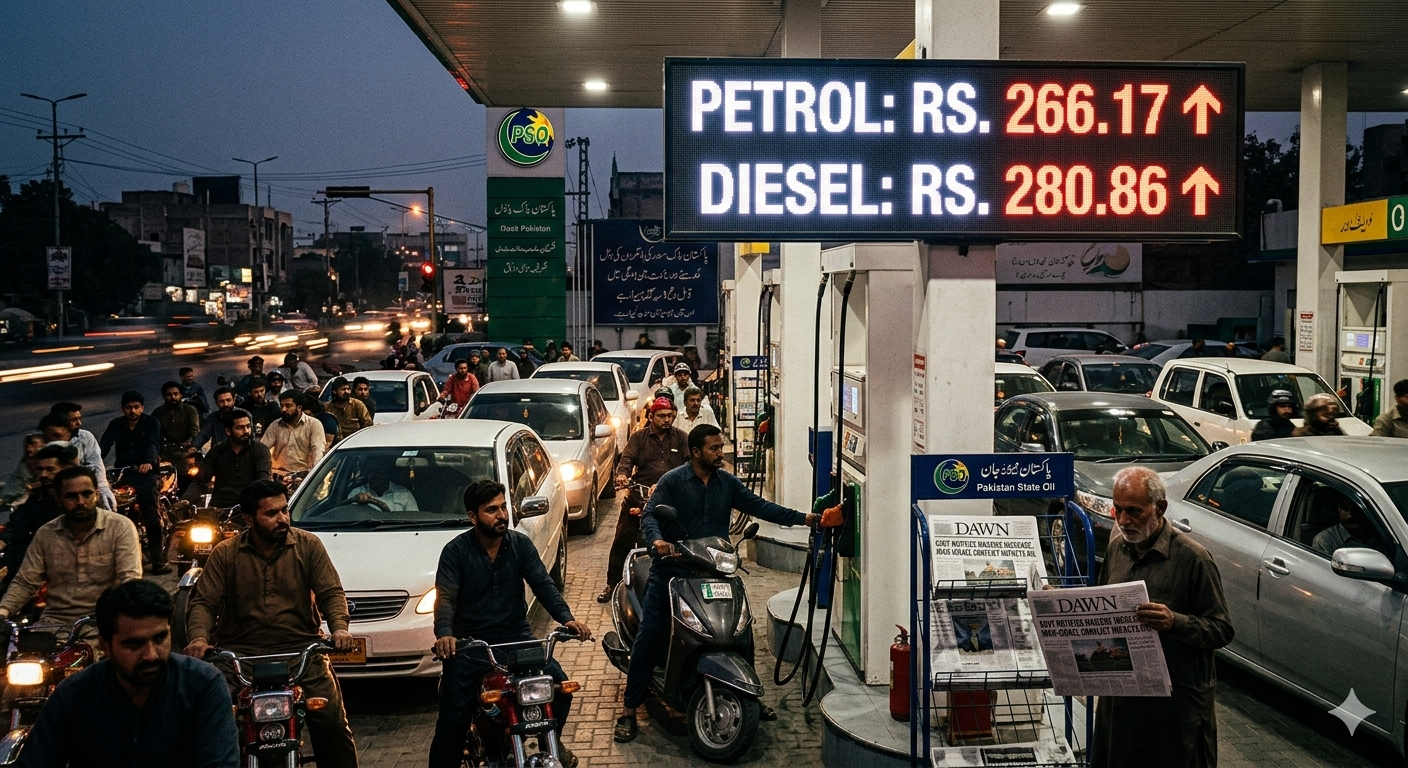
In response to the sharp surge in global oil prices following the joint U.S.-Israeli strikes on Iran, the Government of Pakistan has officially notified a significant increase in petroleum prices, effective March 1, 2026.
The price hike comes as international benchmark Brent crude jumped nearly 10% over the weekend, with analysts warning of a spike toward $100 per barrel due to the potential closure of the Strait of Hormuz.
New Petroleum Prices (W.E.F. March 1, 2026)
| Product | Old Price | New Price | Increase |
| Motor Spirit (Petrol) | Rs. 258.17 | Rs. 266.17 | +Rs. 8.00 |
| High-Speed Diesel (HSD) | Rs. 275.70 | Rs. 280.86 | +Rs. 5.16 |
Why Prices Are Rising
The Ministry of Energy (Petroleum Division) and the Oil and Gas Regulatory Authority (OGRA) cited the following factors for the “panic” increase:
- Geopolitical Conflict: The military escalation in Iran has destabilized the Middle East, a region responsible for one-third of global oil production.
- Supply Chain Risks: Major shipping lanes are under threat, causing insurance premiums and freight costs for oil tankers to skyrocket.
- Global Market Volatility: Oil traders are pricing in “war risk,” causing crude prices to open significantly higher than Friday’s close of $73/bbl.
Impact on the Public
- Transport Fares: Transporters across Pakistan have already warned of a strike and are expected to raise fares for inter-city travel and goods transport.
- Food Inflation: Since high-speed diesel powers the majority of agricultural machinery and food delivery trucks, the price of vegetables and essential grains is expected to rise.
- Economic Pressure: The hike adds to the burden of middle-class households already struggling with high electricity tariffs and inflation.
Expert Insight: Analysts at Kpler and Barclays suggest that if the Strait of Hormuz remains closed, the global market could lose up to 10 million barrels per day, potentially pushing local petrol prices in Pakistan past the Rs. 300 mark in the next fortnight.