







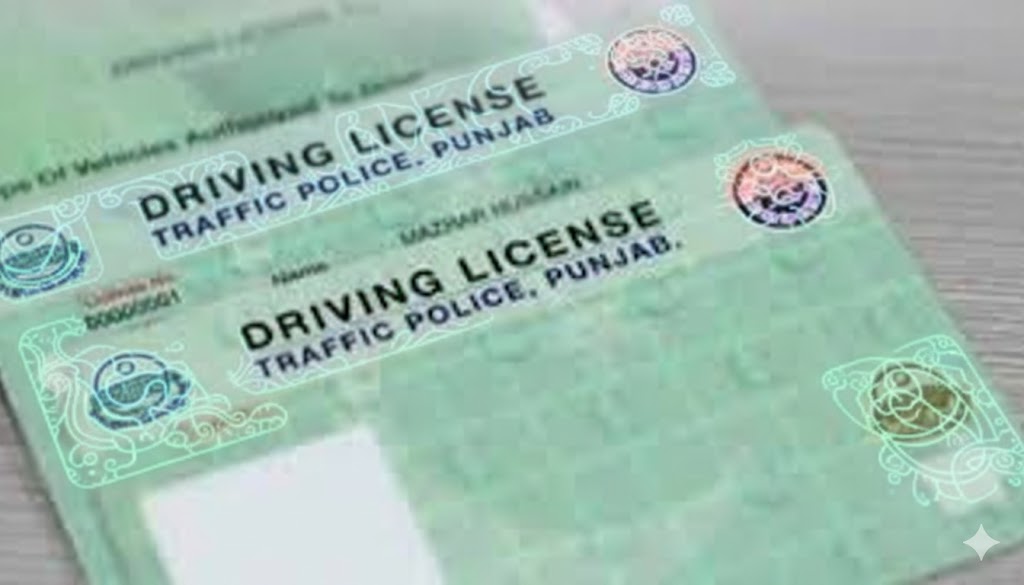
In a significant policy shift aimed at regulating road safety and empowering the youth, the Government of Punjab has officially launched a new initiative to issue Juvenile Driving Permits to teenagers aged 16 to 18.
This move, spearheaded by the Punjab Police and the provincial administration, marks a departure from the long-standing rule that restricted all motorized driving to those aged 18 and above. The policy is scheduled to officially go into effect on March 1, 2026.+1
🚦 Why the Change?
The decision was sparked by a pragmatic look at the reality of commuting in Punjab. Thousands of teenagers across the province—many of whom are college students—already use motorcycles for their daily commute.
Previously, this resulted in frequent arrests and impounded vehicles during traffic crackdowns. By formalizing this practice, the government aims to:
- Regulate Reality: Transition underage riders from “illegal” status to documented, trained drivers.
- Enhance Safety: Ensure young riders pass mandatory safety and sign tests rather than riding without any formal training.
- Parental Accountability: Involve parents directly in the legal responsibility of their children’s driving habits.
📝 Eligibility and Requirements
The permit is not a “free pass” but a restricted license with specific conditions tailored for safety:
1. Age and Category
- Age Bracket: Strictly 16 to 18 years old.
- Vehicle Limit: The permit is currently restricted to motorcycles and scooters only.
- Engine Capacity: In many districts, restrictions apply to engine size (typically up to 125cc), ensuring teens aren’t handling high-powered heavy bikes.
- Speed Limit: A specific cap of 50 km/h is mandated for juvenile permit holders.
2. Mandatory Documentation
Applicants cannot apply solo. The following are required:
- Parental Consent: A mandatory affidavit or written permission from a father or legal guardian (often on stamped paper).
- Identity Proof: A NADRA-issued B-Form or a Juvenile CNIC.
- Parent’s Presence: A parent or guardian must accompany the teen to the licensing center.
3. The Process and Fees
- Fee: A fixed processing fee of Rs. 500.
- Tests: Applicants must pass a Traffic Sign Test and a Practical Road Test to prove their competence.
- Validity: The permit is valid until the individual turns 18, at which point it is automatically canceled, and they must apply for a standard adult driving license.
⚖️ Legal Implications and Safety
One of the most debated aspects of this policy is legal liability. Under the new rules, a licensed 16-year-old is no longer just a “minor in trouble”—they are a licensed driver subject to traffic laws. While they are still prosecuted under juvenile justice procedures, having a license means they can be held accountable for traffic violations.
Traffic authorities have also emphasized that this is not an invitation for “wheeling” or reckless behavior. Strict penalties and immediate cancellation of permits will be enforced for those caught performing stunts or violating the 50 km/h speed limit.
🏛️ Impact on Families
For many parents, this provides a sigh of relief. It removes the fear of their children being detained by police while simply trying to get to school. However, it also shifts the burden of responsibility; parents are now legally testifying that their child is capable and that they accept the risks involved.
The Punjab Government’s message is clear: “Safe driving, safe life.” By bringing 16-to-18-year-olds into the legal fold, the province hopes to create a more disciplined generation of road users.